
Australian Funnel Web Spider Antivenom Advances
Australian funnel web spiders produce some of the world's most dangerous venom, but remarkable advances in antivenom production have transformed outcomes from frequently fatal to highly survivable. Since antivenom introduction in 1981, no deaths have been recorded from funnel web bites in Australia. Recent improvements in venom extraction techniques, antivenom refinement, and rapid distribution systems represent significant medical achievements. These innovations provide models for treating envenomation from other dangerous spider species globally.
Modern Antivenom Production Methods
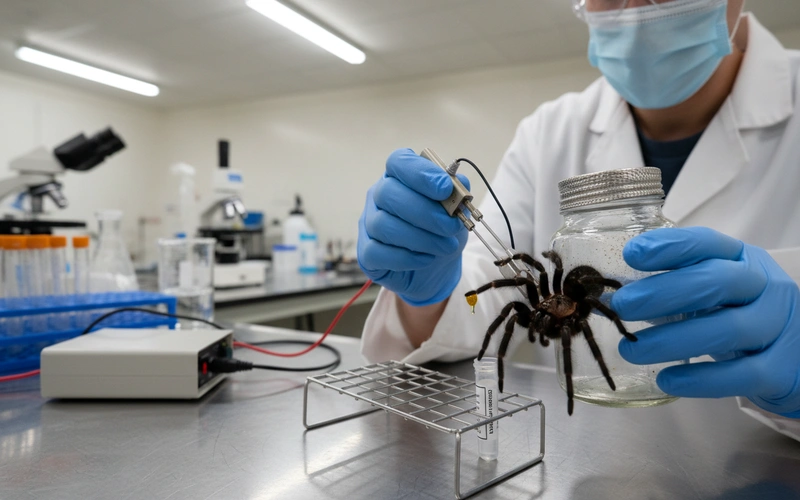
Antivenom production relies on collecting venom from live funnel web spiders, primarily Sydney funnel web specimens captured through public collection programs. Venom is extracted using electrical stimulation, then injected into horses or rabbits to stimulate antibody production. The resulting antibodies are harvested, purified, and processed into therapeutic antivenom. Recent advances have increased antibody yields and reduced production time from six months to approximately four months.
| Production Stage | Traditional Method | Current Method |
|---|---|---|
| Venom Collection | Manual milking, limited yield | Electrical stimulation, 40% higher yield |
| Immunization Period | 6-8 months | 4-5 months with adjuvant enhancement |
| Purification Process | Single-stage precipitation | Multi-stage chromatography |
| Shelf Life | 2 years refrigerated | 3 years with improved stabilizers |
"The collaboration between Australian venom researchers and immunology specialists has created one of the world's most effective antivenoms, with a near-perfect treatment success rate when administered promptly." - Australian Venom Research Unit
Clinical Treatment Outcomes
Funnel web antivenom demonstrates remarkable efficacy with rapid symptom reversal following administration. Patients typically receive two to four vials intravenously, with symptom improvement beginning within 15 to 30 minutes. Complete recovery usually occurs within 24 to 48 hours without lasting complications when treatment begins promptly after envenomation.
- Pre-hospital first aid using pressure immobilization bandaging slows venom spread and improves outcomes dramatically
- Antivenom effectiveness remains high even when administered several hours after the bite occurred
- Pediatric patients require careful dose adjustment but respond well to treatment with age-appropriate protocols
- Regional hospitals throughout Australia now stock adequate antivenom supplies for immediate treatment availability
- Research continues on synthetic antibody alternatives that could simplify production and reduce costs
Global Applications and Future Directions
Success with funnel web antivenom provides a blueprint for developing treatments for other dangerous spiders worldwide. Researchers are applying similar production techniques to create antivenoms for South American armed spiders and African button spiders. Ongoing research focuses on synthetic antibody fragments that could provide shelf-stable alternatives to traditional antivenom. These advances promise improved treatment availability in remote regions and developing nations where refrigerated storage and rapid distribution present challenges. International collaboration continues expanding access to life-saving antivenom technology based on Australian innovations.